
'Here at LGO Therapy Group, our children & families are at the centre of everything we do'
What We Can Help With

At Little Grubbs Orchard, we provide a range of child, youth and adult centred, evidence based, support services for individuals and families impacted by developmental disorders including:
-
Autism Spectrum Disorder (ASD)
-
Intellectual Disability
-
Dealing with Trauma
-
Aniexty & Stress-Related Behaviour
-
Anger Management
-
Attention-Deficit-Hyperactivity-Disorder (ADHD)
-
Language & Communication Delay
-
Global Developmental Delay
-
Oppositional / Persuasive Defiant Disorder
-
Pathological Demand Avoidance
-
Obsessive Compulsive Disorder (OCD)
Understanding Behaviour
Behaviour, Attention & Concentration Concerns
Behaving and concentrating are essential in order to easily sustain attention to an activity to learn new skills, interact with others and play independently or with others. Difficulties with behaviour and concentration can socially isolate children (as well as their parents) and also contribute to learning difficulties.
Our Therapists are specialists in helping children develop effective sensory reactions as well as developing strategies to support appropriate behaviour and attention. We help children develop play skills (independent play as well as with others) including turn taking, planning how to play, and interacting with others.
Children who struggle with behaviour, attention and concentration can have difficulties with:
-
Concentration and sustained attention to an activity (even an enjoyable one)
-
Behaviour that is consistently appropriate to the situation or demands
-
Self Regulating (adjusting) their physical activity, emotional state or thoughts to match the situation or task
-
Appropriate sensory reactions to stimuli/life events (children may over or under-react which impacts not only their attention and behaviour but also their learning).
-
Sitting to engage in, or sustain engagement in, activities in order to complete them
-
Learning across the board that is age appropriate


Speech, Language & Communication
Communication is an important life skill that children learn at a very young age. Unfortunately, it is common for many children with autism to have delays in speech, and difficulty in communicating others.
Our Oral Motor & Language Therapy program effectively addresses language and communication in an effort to help children learn to communicate their needs.
Our curriculum has a strong emphasis on teaching communication and language. From day one we focus on teaching our clients how to advocate for themselves by requesting items and activities they want and need.
Academics, Cognitive Functioning & Learning
Learning requires the combination of attention and concentration, language, memory, problem solving, organisation, and the ability to plan and sequence thoughts. When learning is challenging, the most immediate indicator of difficulty is often poor behaviour, reflecting avoidance or rapid and extreme disengagement.
Our Therapists are trained to help children develop the foundation skills that allow learning (in all its forms) to occur. This includes physical, language, play, attention/concentration and behaviour. Children who have learning difficulties can struggle with:
General
-
Maintaining attention resulting in them being easily distracted
-
Using appropriate behaviours resulting in challenging behaviours (or avoidance)
-
Recalling skills that been learnt previously to then use the skills
-
Applying the knowledge that has been learnt, or using the same skill but in a new way or in a new situation
-
Understanding new concepts
-
Remembering concepts/consistent memory
-
‘Seeing’ the similarities between tasks or concepts
-
Using or applying information from one task or activity to another
-
Getting their thoughts on paper, even though they may be able to ‘talk it out’
-
Using language in an ordered and logical way to give instructions, tell a story, to re-count an event or express ideas and thoughts.
-
Learning to read, write and spell (e.g. get stuck on the same sightwords for a long time)
Organisation
-
Organisation skills (awareness of time frames, materials)
-
Learning from their mistakes
-
Collecting the materials needed for school or play activities
-
Appearing interested (they might even be accused of being lazy or rude)
-
Seeing the ’big picture’ of a task or situation and instead gets very fixed on small details
-
Predicting what might be going to happen next
-
Planning out a story or school project (eg essay)


Social-Emotional Concerns & Challenges
Play and Socials skills are the foundations of mature learning skills that require attention and concentration, appropriate behaviour, effective language skills and the ability to plan and sequence physical skills (e.g. games) and to anticipate what might happen next. Without these skills, play skills are few and repetitive (or bossy) and social skills are underdeveloped resulting in social isolation. Both can also contribute to learning delays.
Our Therapists are skilled in supporting children to develop play and social interaction skills, including turn taking, anticipating what’s coming next and reading facial and body gestures to help read ‘social cues’. Children who struggle with play and social skills can have difficulties with:
General
-
Attention and concentration
-
Staying engaged in one activity or with one person
-
Expressing and/or adjusting their emotions to match the activity or environment
-
Understanding consequences of their actions
-
Working independently and as a result often interrupts adults for ‘help’
Play
-
Playing with a range of toys/play
-
Independent play and often prefers/requires an adult to help them begin and sustain play
-
Following the lead of others in play and may appear bossy, telling others how to play (because they don’t know how to vary the play themselves).
-
Playing with toys as they are intended and may have a tendency to up-end toys on the floor to look like they’re playing but not necessarily use them, or appear destructive with toys
-
Taking turns/sharing
Social Skills
-
Entering a group or play with others as they don’t know how to politely join in and can appear ‘rude’
-
Engaging in a two way conversation and instead speaks ‘at you’ in a conversation rather than ‘with you’
-
Reading other people’s feelings based on their verbal and non-verbal cues
-
Maintaining a topic of conversation and instead provide irrelevant comments during a conversation
-
Making and maintaining/keeping friendships
-
Coping with winning and losing in a game
Gross Motor Skills Development Concerns
Moving your body, whether in play or in the course of daily activities, helps children to keep their attention, allows them to engage in play skills like running, jumping, and ball skills and helps them to easily engage in self care skills such as dressing, getting on/off the toilet, getting in/out of the car, and stepping over objects on the floor or moving around furniture.
Our Therapists help children enhance their body or spatial awareness, physical coordination, endurance and planning and sequencing of their movements in order to develop their physical skills for play, moving around and self care skills. Children who struggle with whole body movement skills can have difficulties with:
Physical skills
-
Rapid fatigue/tiring or showing only short bursts of energy
-
Avoiding or not appearing interested in physical activities
-
Rushing performance of physical tasks (to mask difficulty or fatigue)
-
Silly task performance of physical task they find challenging
-
Bossiness in telling others how to do the physical task or play the game without actively engaging themselves
-
Being clumsy, awkward and/or not seeming to learn from their mistakes
-
Less than age appropriate physical skills (eg swimming, bike riding, ball skills)
Self Care skills
-
Dressing
-
Toileting
-
Hygiene (eg brushing long hair)
-
Moving about the house, in/out of the car
-
Manoeuvring around furniture


Fine Motor Skills Development Concerns
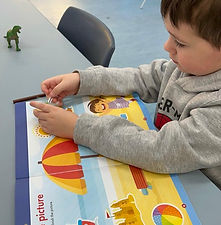
Skillfully using your fingers is necessary for academic skills like writing and cutting; play skills like Lego construction and manipulation of small toy pieces; and self care skills such as using zips and buttons, opening lunch boxes, tying shoelaces and cleaning teeth.
Our Therapists can help children develop the fundamental fingers skills that are crucial for academic, play and self care skill development. Children who struggle with fiddly finger skills can have difficulties with:
Academic Skills
-
Pencil skills (writing, drawing, colouring)
-
Scissor skills (cutting)
Self Care
-
Dressing – Tying shoelaces, doing up sandals, zips, buttons, belts
-
Eating – Using cutlery, opening lunch boxes and zip lock bags
-
Hygiene – Cleaning teeth, brushing hair, toileting
Play
-
Construction skills using Lego, duplo, puzzles, train tracks
-
Doll dressing and manipulation
-
IT use (e.g. mouse and stylus manipulation)
Support Services Connecting Across all Ages
Early Intervention
0-9 Years
Individualised Developmental Support
Tailored therapy plans focusing on communication, social, emotional, cognitive, and physical milestones unique to each child’s needs. This includes the primary focus on all 5 areas of development.
Speech and Language Development
Building communication skills through play-based activities that encourage speech, language comprehension, and expressive communication.
Occupational Therapy & Sensory Integration
Supporting fine and gross motor skills, sensory processing, self-care, and independence in daily routines.
Behavioural and Emotional Regulation
Guiding positive behaviour strategies, emotional understanding, and self-regulation to foster confidence, resilience and building positive relationships.
Family Coaching and Collaboration
Empowering parents and caregivers with practical tools and strategies to continue progress at home and in community settings.
Youth
10-25 Years
Emotional Wellbeing and Mental Health Support
Helping young people build confidence, resilience, and healthy coping strategies for life’s challenges.
Social Skills and Peer Connection
Developing communication, teamwork, and relationship-building skills to strengthen positive social interactions.
Executive Functioning and Independence
Supporting organisation, planning, problem-solving, and self-management skills essential for school and daily life.
Behavioural and Emotional
Regulation
Providing tools to understand emotions, manage stress, and make positive choices in challenging situations.
Goal-Focused Family and School Collaboration
Working together with families, educators, and support networks to create consistent strategies and lasting outcomes.
Adults
26+ Years
Emotional Health and Wellbeing
Supporting adults to manage stress, anxiety, and life transitions while building resilience and self-awareness.
Functional and Daily Living Skills
Enhancing independence, organisation, and problem-solving to improve participation in work, home, and community life.
Social Connection and
Communication
Strengthening interpersonal skills, confidence, and meaningful relationships through effective communication strategies.
Behavioural and Cognitive
Support
Assisting with behaviour regulation, emotional insight, and adaptive thinking to promote positive change.
Collaborative and Goal-Driven Approach
Working alongside individuals, families, and care teams to set personalised goals and achieve sustainable outcomes.
Our Therapy Programs

Autism
Early
Intervention

Self Care &
Personal
Hygiene

Social
Functioning Skills
& School Prep

Language,
Literacy & Handwriting

Training
Packages
& Workshops

NDIS Reporting
& Support Coordination

Art
Therapy
& Craft

Play
Therapy &
Counselling
Expressive & Responsive Speech Development

Oral Motor
Language Development

Gross Motor
Balance/
Coordination

Fine
Motor Skill
Development